 |
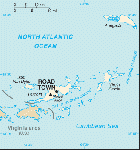
U.S. Virgin Islands is located in the Caribbean and is known for U.S. territory travel, beaches, sailing, national park scenery, and duty-free shopping. It offers travelers a mix of cultural experiences, practical travel infrastructure, local food, historic sites, and natural scenery. Whether visitors are arriving for tourism, business, family travel, study, or a longer stay, U.S. Virgin Islands rewards preparation because the first hours after landing are often when maps, messaging, transportation apps, hotel confirmations, and translation tools matter most.
The capital or primary administrative center is Charlotte Amalie. The main language used locally is English, while English may be more common in airports, major hotels, business districts, and heavily visited tourism areas. The currency used is United States Dollar (USD). Travelers should confirm visa rules, entry documents, health requirements, and airport procedures before departure, as requirements can vary by nationality and purpose of travel.
Some of the best-known places and experiences in U.S. Virgin Islands include St. Thomas, St. John, St. Croix, Trunk Bay, and Charlotte Amalie. These attractions help define the destination for many visitors, but the most rewarding travel experiences often come from combining famous landmarks with local neighborhoods, markets, regional food, scenic drives, and cultural sites outside the most obvious tourist paths.
For OneSimCard travelers, the most important practical point is simple: arrive connected. Having mobile data ready before landing can reduce friction immediately, especially when navigating airports, arranging transportation, checking hotel directions, confirming reservations, contacting local hosts, or using translation and messaging apps.
How is Mobile Coverage in U.S. Virgin Islands:
Mobile coverage in U.S. Virgin Islands is generally strongest in major cities, airports, tourist districts, commercial centers, and along key transportation routes. Major local networks typically include AT&T, T-Mobile, Liberty, and Viya. In most populated areas, travelers can expect usable mobile data service, and in many destinations 4G is widely available with 5G expanding in larger cities and high-demand tourism zones.
Coverage is generally strong in towns, resorts, beaches, cruise ports, and populated areas, with occasional weaker service on remote beaches, small islands, or hilly interiors.
Travelers should remember that mobile performance can vary by device, plan, network partner, terrain, building density, weather, and local network congestion. A multi-network international eSIM or international SIM card can help improve the chances of staying connected by allowing access to available partner networks where roaming agreements are supported. This is especially helpful when moving between airports, hotels, cities, resorts, rural regions, or border areas.
What to Expect When Landing in U.S. Virgin Islands
If you're arriving in U.S. Virgin Islands for tourism, business, family travel, study, or a longer stay, you will most likely arrive through Cyril E. King Airport on St. Thomas or Henry E. Rohlsen Airport on St. Croix. Larger airports usually offer immigration services, baggage claim, customs screening, currency exchange, transportation counters, taxi areas, and mobile connectivity options. Smaller airports may have fewer services, shorter walking distances, and more limited late-night transportation options.
Immigration and Entry
Upon arrival, travelers proceed through immigration or border control where officials review passports and any required travel documents. Depending on nationality and travel purpose, this may include a visa, eVisa, visa-on-arrival approval, residence permit, electronic travel authorization, invitation letter, onward ticket, or hotel confirmation.
Keep the following readily accessible:
Passport with sufficient validity
Visa, eVisa, or travel authorization if required
Return or onward travel information
Hotel reservation or local address
Travel insurance documentation if requested
Proof of sufficient funds if requested
Business, study, or invitation documents if applicable
Baggage Claim and Customs
After immigration, collect your luggage and proceed through customs screening. Customs procedures are usually routine, but travelers should be prepared to declare restricted goods, commercial products, professional equipment, drones, large amounts of currency, satellite communication devices, food items, or other regulated items when required.
Mobile Connectivity
Local SIM cards and eSIM options may be available at airports, telecom shops, convenience stores, shopping centers, or authorized mobile retailers. Registration requirements vary by destination and may require passport identification, local address information, or biometric verification.
Travelers who install an international eSIM or activate an international SIM card before departure can often connect shortly after landing. This avoids the need to search for a mobile provider immediately after arrival and makes the first steps of the trip easier.
Transportation from the Airport
Transportation options commonly include:
Official taxis
Ride-hailing services where available
Hotel transfers
Private transportation providers
Airport buses or shuttles
Rail, metro, or ferry connections where available
Rental cars or cars with drivers
It is recommended to use official transportation providers, confirm pricing before departure when using taxis, keep your hotel address available in the local language when helpful, and arrange late-night transfers in advance when airport services may be limited.
Currency and Payments
The local currency is United States Dollar (USD). Credit and debit card acceptance is usually best at hotels, airports, shopping centers, larger restaurants, and established tourism businesses. Cash remains useful for taxis, local markets, small shops, rural communities, tips, street food, and independent vendors.
ATMs are commonly available in major cities and airports, but availability can be more limited in rural areas, islands, national parks, border regions, and smaller towns. Travelers should carry a reasonable backup payment method.
Internet and Wi-Fi
Wi-Fi is commonly available at hotels, airports, cafés, restaurants, shopping centers, business facilities, and some public spaces. Speeds and reliability vary by destination, provider, and location. Public Wi-Fi can be helpful, but it should not be the only plan for essential tasks such as transportation, maps, banking, translation, or emergency communication.
Best Preparation
Activate your eSIM or SIM card before departure.
Arriving with mobile connectivity already active can make your first hours in U.S. Virgin Islands much smoother, especially if you need maps, hotel directions, transportation bookings, ride-hailing apps, translation services, business communications, tour confirmations, ferry or train schedules, restaurant reservations, or access to important travel information immediately after landing. |